Photobiomodulation and Rosacea: Can Persistent Redness Be Reduced?

Rosacea often manifests on the face as widespread redness, which can sometimes be persistent. This skin sensitivity can change over time and become difficult to manage. In the quest to restore balance, LED photobiomodulation offers a gentle approach based on exposing the skin to controlled light.
While not strictly a form of treatment, this technique is more of a supportive approach, with effects that develop gradually over the course of the sessions.
Rosacea, couperose, and acne: Understanding reactive skin
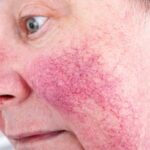
Rosacea mainly affects the skin on the face. It manifests as redness, sometimes accompanied by small visible blood vessels, known as telangiectasia.
Several mechanisms come into play:
- highly reactive skin microcirculation
- persistent skin inflammation
- a weakness in the protective barrier
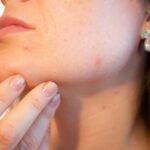
In some cases, pimples may appear, making rosacea look similar to acne. This overlap between acne and rosacea is not uncommon, even though their causes differ.
The skin then becomes more sensitive to temperature changes, stress, or certain products. The goal is to support this reactive skin, rather than trying to radically transform it.
Photobiomodulation and LEDs: Action at the Cellular Level
Photobiomodulation involves the use of LEDs that emit specific wavelengths, particularly in the red and infrared spectrums.
When the skin is exposed to this light, a cellular reaction occurs:
- skin cells receive a light signal
- their cellular activity is gently stimulated
- natural balancing mechanisms are supported
Red light acts mainly on the surface, while infrared light penetrates deeper into the tissue.
This cellular stimulation involves a gradual modulation of skin activity under the influence of LED light, while respecting the skin’s natural balance.
Persistent redness: What are the effects of LED therapy?
The effects of photobiomodulation are not immediate. They appear gradually, over the course of several sessions.
With regular use of LEDs, certain changes can be observed:
- a gradual reduction in skin redness
- a soothing sensation in overheated areas
- skin that is less reactive to triggers
Red LED light is often associated with a soothing effect on inflammation. Infrared light penetrates deeper, particularly affecting the skin’s microcirculation.
In the case of rosacea, the small blood vessels remain visible. Photobiomodulation does not eliminate them, but it can help reduce their appearance by reducing the inflammatory reactions around them.
A formula suitable for sensitive skin and acne-prone skin
Some people have a combination of rosacea, couperose, and acne. This combination makes it more challenging to choose the right skincare products.
LEDs can therefore be a useful option in a routine:
- they help reduce acne-related inflammation
- they help soothe the skin overall
- they help maintain a more stable skin environment
Photobiomodulation does not replace conventional treatment when it is necessary, but it can be incorporated as a complementary measure into a comprehensive approach to skin health.
What happens during an LED session?
A photobiomodulation session is generally simple and comfortable.
The skin is exposed to light emitted by LEDs for a few minutes. Several formats are available:
- LED face masks
- lighted signs to cover a larger area
- portable devices for specific uses
A session typically lasts anywhere from a few minutes to about ten minutes.
Consistency is key. Several sessions per week are often recommended at the beginning, before gradually spacing them out.
This repetition allows cellular activity to unfold over time.
Photobiomodulation and consistency: a key factor
The effect of LEDs on the skin depends heavily on the frequency of the sessions.
Several factors influence the results:
- the skin's original condition
- the severity of redness or rosacea
- the possible presence of acne
- the frequency of photobiomodulation sessions
Two people using the same protocol may observe different results.
The skin functions in cycles. The cellular stimulation provided by LEDs supports these cycles without disrupting them.
Incorporating LEDs into a cohesive routine
Photobiomodulation is part of a comprehensive skincare routine. It does not replace other daily skincare steps.
Here are a few guidelines to help you use it:
- Choose gentle skincare products suitable for sensitive skin
- avoid identified triggers
- maintain a consistent schedule for LED sessions
This consistency helps enhance the effects and provides long-term care for the skin.
For soothed skin and reduced redness
Rosacea, like acne or couperose, progresses in phases. Some periods are milder, while others are more severe.
LED photobiomodulation, which combines red and infrared light, works at the cellular level to support the skin’s natural processes.
Over the course of the sessions, the skin may appear calmer, with a gradual reduction in persistent redness. The change is gradual and sometimes subtle, but it becomes more noticeable over time.
The goal is not to replace an existing treatment, but to offer a complementary approach focused on skin comfort and well-being.

 Comment l’alimentation et la photobiomodulation peuvent-elles aider à gérer le psoriasis ?Par Vanessa, le 27 septembre 2024
- Comment la photobiomodulation apaise-t-elle la peau après un peeling ?Par Vanessa, le 25 décembre 2025
- Comment la photobiomodulation peut-elle aider à la réjuvénation du visage ?Par Vanessa, le 12 janvier 2025
- Photobiomodulation et acné inflammatoire : comment la lumière bleue et rouge agissent-elles ?Par Vanessa, le 19 mars 2026
- Comment apaiser une brûlure avec la photobiomodulation ?Par Vanessa, le 7 mai 2024
- Photobiomodulation et rosacée : peut-on réduire les rougeurs persistantes ?Par Vanessa, le 9 avril 2026
- Comment atténuer la ride du lion avec la photobiomodulation ?Par Vanessa, le 14 juin 2024