What happens during a photobiomodulation session at the clinic?

Walking into a photobiomodulation clinic often means discovering a subtle, almost silent approach. No invasive procedures, no sudden sensations. Just a soft, targeted light that supports the cells’ natural functioning.
For many, the first session raises some simple questions: How long does it last? What will it feel like? How is the light used?
Understanding how the sessions work allows you to approach them with greater peace of mind and a clearer understanding of what they can offer.
An initial discussion to define the framework
Even before turning on a single LED, the session begins with a discussion. This moment lays the groundwork.
The practitioner considers several factors:
-
The affected areas: face, scalp, back, joints…
-
Symptoms experienced: tension, stiffness, localized discomfort
-
Lifestyle: sleep, physical activity, fatigue levels
-
Goals: soothe the area, support recovery, and improve the skin's appearance
This discussion helps determine the appropriate indications for photobiomodulation. The goal is not to apply a standard protocol, but to tailor the settings to each individual.
Setup and Preparation for the Session
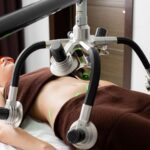
Once the reference points have been established, the procedure is simple. The person lies down or sits, depending on the area to be examined. The position is designed to remain comfortable throughout the entire session.
The treatment area is usually cleared to allow for optimal light diffusion. No direct contact is necessary: the LED devices are positioned a few centimeters away from the skin.
In some cases, safety glasses may be recommended, particularly when the light is close to the face.
The Placement of Light Sources
The key to the session lies in the precise placement of the light sources.
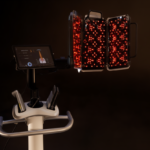
LED panels or portable devices are positioned to provide uniform coverage of the area. The goal is to provide even lighting without any shadows.
According to the instructions, several configurations are possible:
-
Localized exposure: a joint, a specific muscle group
-
Extensive exposure: back, legs, or large areas of the body
-
Targeting the scalp: using appropriate devices, such as helmets designed to provide uniform light distribution.
The distance between the light source and the skin is adjusted to ensure the intensity is appropriate—neither too low nor too high.
What settings are used during a session?
Photobiomodulation relies on precise settings. The light used is not chosen at random.
Three main components make up a session:
-
Wavelength
. Red or near-infrared light is preferred. Each wavelength penetrates tissue differently and interacts withcellular activity. -
Light intensity
It corresponds to the amount of energy emitted. A moderate intensity is desired to support natural processes without disrupting them. -
exposure time It varies depending on the area and the objective. A session generally lasts 10 to 30 minutes.
These adjustments help influence cellular regeneration processes, particularly by supporting energy production within cells.
What does it feel like during the session?
The treatment is notable for its comfort. Most people describe a sensation of gentle warmth, without any burning.
There is no pain associated with exposure. Some people experience:
-
a slight relaxation of the muscles
-
a sense of overall relaxation
-
sometimes a very slight tingling sensation, depending on the area
Others feel almost nothing at the time. This does not mean that the session is ineffective: the effects of photobiomodulation often take time to become apparent.
After the session: What changes can we expect?
At the end of the session, no special precautions are necessary. You can resume your normal activities immediately.
The effects observed vary depending on the individual and the indication. Some people describe a feeling of lightness or flexibility in the hours that follow. For others, the changes occur more gradually.
Photobiomodulation works at the cellular level. It can help:
-
support the skin's regeneration processes
-
help alleviate certain sensations of pain or tension
-
improve recovery after exercise
Results are neither immediate nor consistent. They depend on the context, the frequency of the sessions, and the area being treated.
How often should the sessions be held?
A single session rarely produces lasting results. Photobiomodulation is based on the principle of repetition.
The pace is tailored to each situation, but it often includes:
-
Initial phase: 2 to 3 sessions per week
-
A maintenance phase: 1 session per week or at longer intervals
This pace allows us to gradually support cellular mechanisms without overtaxing them.
Two individuals following a similar protocol may experience different results. How they feel, the condition of their skin, and the intensity of their pain all influence their response to the sessions.
A gradual and personalized approach
A photobiomodulation session is more than just exposure to light. It relies on a balance between technical precision and tailoring the treatment to the individual.
The protocol evolves over the course of the sessions. The parameters can be adjusted based on how you feel, changes in the targeted areas, and your goals.
This gradual approach allows photobiomodulation to be integrated into a holistic wellness program. Light does not replace anything; it complements it.
Over time, some people learn to recognize the times when their bodies respond best, and adjust the pace of their workouts accordingly.
See also:

- Which photobiomodulation device to choose: lamp, helmet or laser? April 6, 2025 Vanessa

- Photobiomodulation vs. Light Therapy: What Are the Practical Differences? October 19, 2026 Vanessa
- What are the benefits of photobiomodulation? July 9, 2024 Vanessa
- How can photobiomodulation help relieve pain? December 12, 2024 Vanessa
- Is photobiomodulation reimbursed by health insurance? May 21, 2024 Vanessa
- How does photobiomodulation work at the cellular level? April 2, 2026 Vanessa
- Photobiomodulation: What Are the Side Effects and Contraindications? March 3, 2026 Vanessa
- Photobiomodulation: definition, principles and therapeutic applications October 8, 2024 Vanessa
- What happens during a photobiomodulation session at the clinic? November 25, 2026 Vanessa
- Photobiomodulation in Oncology: Rose Magazine Covers the Topic October 13, 2026 Vanessa