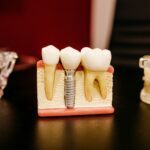
Photobiomodulation, Dental Implants, and Osseointegration

The placement of dental implants relies on a fundamental process: osseointegration. This interaction between the implant and the bone requires time, stability, and a favorable environment. In this context, photobiomodulation (PBM), which uses low-intensity LEDs or lasers, is attracting growing interest as a way to support this delicate phase.
Without replacing existing implantology practices, it offers a complementary approach based on cellular stimulation and support for the body’s natural bone healing mechanisms.
Understanding Osseointegration
Osseointegration refers to the bone’s ability to bond directly to the surface of the implant. This process begins as soon as the implant is placed and continues for several weeks, sometimes several months.
At the microscopic level, bone cells orchestrate this integration. They multiply, produce bone matrix, and gradually stabilize the implant within its environment.
Certain factors can influence this phase:
- Bone quality: bone density and structure at the time of implantation
- Local inflammation: a normal reaction, but one that must be kept under control
- Mechanical stresses: pressure exerted on the implant during healing
In this context, any approach capable of supporting cellular activity and limiting inflammation attracts attention.
How Does Photobiomodulation Affect Cells?
Photobiomodulation is based on the absorption of light by cells. This interaction triggers a cascade of biological reactions, particularly within the mitochondria.
One of the key factors is ATP production. This molecule plays a central role in cellular activity by providing the energy needed for regeneration and healing processes.
Under the influence of PBM, several phenomena are observed:
- Stimulation of cellular activity: bone cells become more active
- Increased ATP production: support for energy metabolism
- Modulation of Inflammation: Contributing to a More Balanced Response
This effect can be compared to a more favorable environment for the cells, as if the conditions were becoming more conducive to their functioning.
Supporting bone healing around implants
After an implant is placed, the peri-implant area goes through various phases. Initial inflammation occurs, followed by a phase of bone regeneration.
Photobiomodulation can be integrated into this process by supporting these stages. It does not abruptly accelerate the process, but it can help make it flow more smoothly.
Some reports state:
- A gradual decrease in pain in the days following the procedure
- A more comfortable sensation, associated with better-regulated inflammation
- Bone healing that is perceived as more stable over time
These changes vary depending on the individual and the initial conditions. They often reflect the body’s improved adaptation rather than an immediate change.
The Role of Lasers and LEDs in Implantology
In implantology, photobiomodulation can be performed using LED or laser devices. Both technologies are based on the same principle but are applied in different ways.
LEDs emit light over a wider area, making them suitable for large areas. Lasers, which are more focused, allow for precise treatment of a specific area, such as the implant site.
The choice depends on several factors:
- Implant Location
- Sensitivity of the area
- Desired outcome (comfort, wound healing, cellular support)
In both cases, the intensity remains low and suitable for repeated use on a regular basis.
Planning Treatment Sessions for a Dental Implant
The incorporation of photobiomodulation into a dental implant treatment plan depends on maintaining a consistent schedule for the sessions.
Sessions are usually short, typically lasting just a few minutes per area. They can be scheduled at various times:
- Before implantation: preparation of the tissues and optimization of the local environment
- Immediately after implantation: management of the initial inflammatory phase
- In the coming weeks: support for bone regeneration
The pace is then adjusted based on how you feel. A more frequent schedule at the beginning may give way to gradually longer intervals.
This monitoring helps ensure that the PBM continues seamlessly, without overburdening the organization.
Perceptions and Possible Developments
Each person experiences this differently. Some quickly notice a reduction in pain or a feeling of local comfort, while others observe more subtle changes.
As the sessions progress, you may experience:
An area that is less sensitive to touch or chewing, a gradual sense of stability around the implant, or a recovery process that feels more comfortable.
These impressions remain subjective. They often reflect a gradual adaptation of the tissues and better management of inflammation.
A Complementary Approach to Well-Being
Photobiomodulation is not a substitute for the techniques used in implantology. Rather, it serves as a complementary approach focused on well-being and understanding the body.
She encourages people to pay attention to the signals coming from the implanted area, to adjust the sessions, and to find a suitable rhythm. This gradual approach helps support the body’s natural mechanisms without rushing them.
In the field of dental implants, PBM offers an intriguing approach: one that involves gentle support focused on cells, energy, and regeneration, while allowing the necessary time for osseointegration.
See also:

- Which foods promote bone consolidation? November 28, 2024 Vanessa

- Photobiomodulation, Dental Implants, and Osseointegration November 20, 2026 Vanessa
- Non-union: What Should Be Done, and What Role Does Photobiomodulation Play? June 26, 2024 Vanessa
- Can photobiomodulation speed up post-surgical recovery? July 20, 2025 Vanessa
- Photobiomodulation and Fatigue Fractures in Athletes: Prevention and Recovery November 3, 2026 Vanessa
- Photobiomodulation and Osteoporosis: Can It Boost Bone Density? October 14, 2026 Vanessa
- Pain During Bone Healing: Can Photobiomodulation Help? May 13, 2024 Vanessa