Postherpetic Neuralgia: What Role Does Photobiomodulation Play?
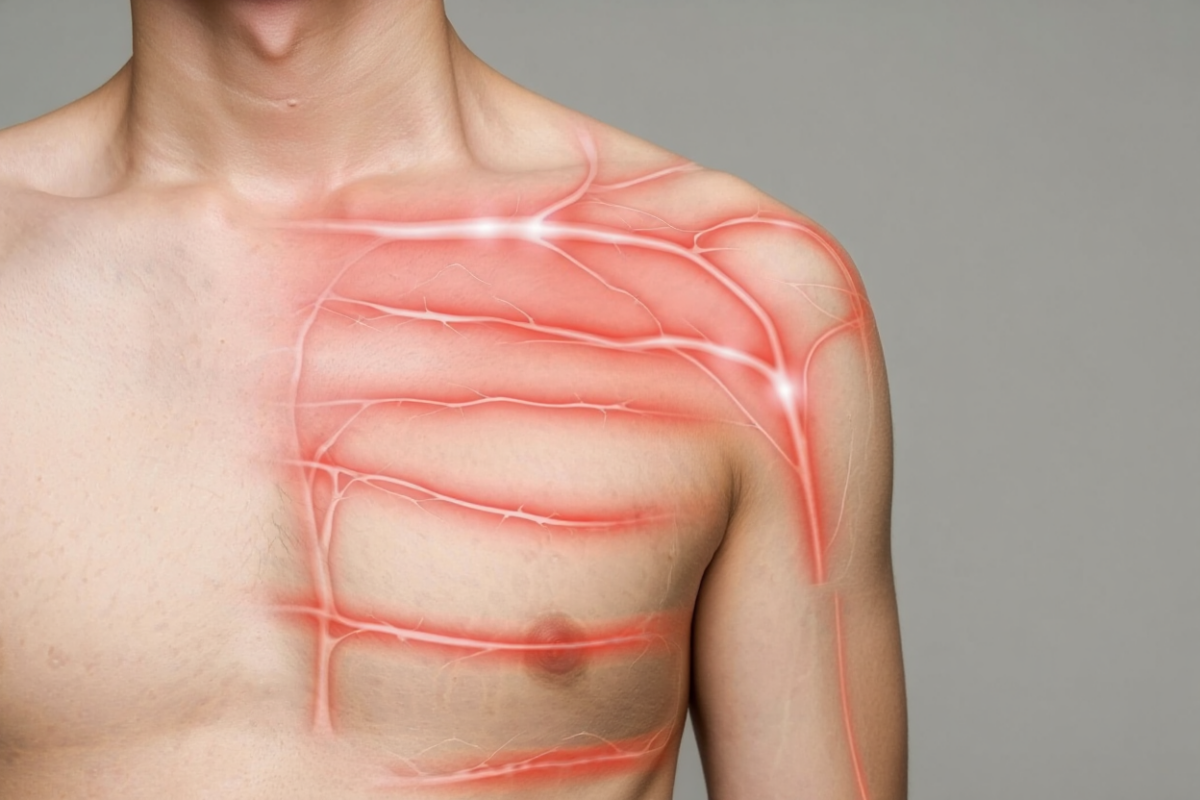
After a case of shingles caused by the herpes virus, the skin infection phase generally resolves within a few weeks. However, the pain can persist well beyond that. It becomes more diffuse, sometimes confusing, and becomes a part of daily life. This condition, known as postherpetic neuropathy, leads many people to seek solutions for better pain management. Photobiomodulation, which uses low-power LEDs or lasers, is part of this approach, with a focus on nerve tissue.
Understanding Neuropathic Pain Following a Herpes Infection
Shingles is caused by a reactivation of the herpes virus. During this infection, the virus travels along a nerve, which explains the localized, often intense sensations.
Even after the wound has healed, certain symptoms persist. These are no longer related to the infection itself, but to a disruption in nerve function. This condition is known as postherpetic neuropathy.
These sensations can take many forms:
- Persistent burning sensations, sometimes difficult to pinpoint exactly
- Sudden discharges, similar to electrical pulses
- Hypersensitivity, particularly of the skin or upon contact
When the affected area is the face or mouth, these symptoms can be particularly bothersome, especially during meals or daily personal care.
Why Does Pain Persist After an Infection?
Even after the herpes infection has cleared up, the nerve sometimes remains weakened. It continues to send pain signals, as if it were still on high alert.
There are several mechanisms that may explain this persistence:
- prolonged nerve inflammation
- disorganized electrical activity in the nerve
- increased sensitivity of the surrounding tissues
This phenomenon explains why pain can last for several weeks, or even longer, even when the skin appears to have healed completely.
Photobiomodulation: The Role of Lasers in Pain Management
Photobiomodulation is based on the use of low-power LEDs or lasers. This technology acts at the cellular level without generating excessive heat.
In the context of postherpetic neuralgia, laser therapy is being studied for its potential to support nerve tissue. It may help create a more stable environment around the nerve, promoting a gradual reduction in pain.
Photobiomodulation sessions are designed, in particular, to:
- help reduce local inflammation
- promote more consistent cellular activity
- modulate the transmission of pain signals
This process takes time. Pain relief does not happen instantly, but is often observed over the course of several sessions.
Changes in Pain Over the Course of the Sessions
Each person perceives changes in their own way. Some changes may occur gradually, without any clear break.
Over the course of the sessions, the following is sometimes observed:
- A decrease in the intensity of pain, with less sharp sensations.
- A reduction in episodes of sudden or unpredictable pain.
- Greater tolerance to skin contact, particularly in sensitive areas such as the mouth or chest.
These changes are gradual. They reflect an adaptation of the nervous system rather than a sudden loss of sensation.
Adjusting the Timing of Photobiomodulation Treatments
Photobiomodulation treatments are based on regular, targeted sessions. The duration is generally short, but repeating the sessions helps maintain constant stimulation.
At first, sessions are usually scheduled close together to address the most acute pain. The laser is applied along the path of the affected nerve, as well as to the surrounding areas.
In certain situations, such as when the mouth or face is involved, treatment requires precise adjustments. The power level is adjusted to accommodate the sensitivity of the tissues.
Over time, the frequency of sessions may change. It is adjusted based on the reduction in pain and how you feel.
Incorporating Care into Daily Life
Managing postherpetic pain isn't just about treatment sessions. The daily environment also plays a role in how comfortable a person feels.
Here are a few simple tips to go along with your treatment:
- Choose appropriate clothing to minimize friction on painful areas
- Adapt care procedures, especially when the mouth is affected
- Identify situations that exacerbate pain so you can better anticipate them
These adjustments help reduce unnecessary strain on sensitized nerves.
Toward a Gradual Reduction in Pain
Postherpetic neuralgia can be long-lasting and affect a person’s well-being. Photobiomodulation offers a gradual approach based on regular sessions and the use of a laser.
Over the course of several weeks, some people notice an improvement in their comfort. The sensations become more stable and less intrusive.
This progression varies from person to person. It involves a gradual adaptation of the body, supported by regular medical care and a better understanding of the mechanisms involved in the initial infection.
See also:

- Can photobiomodulation reduce the frequency of migraines? March 12, 2025 Vanessa

- How can photobiomodulation help relieve chronic pain? May 27, 2024 Vanessa

- Photobiomodulation and digestive health: a new form of supportive care October 25, 2024 Vanessa
- Photobiomodulation in Oncology: Rose Magazine Covers the Topic October 13, 2026 Vanessa
- How can photobiomodulation relieve osteoarthritis of the hands? March 28, 2025 Vanessa
- Postherpetic Neuralgia: What Role Does Photobiomodulation Play? November 5, 2026 Vanessa
- Photobiomodulation and Sleep Quality: What Role Does It Play in Supportive Care? August 26, 2024 Vanessa

- Photobiomodulation and Neuropathic Pain: Targeting the Peripheral Nerves October 16, 2026 Vanessa

- Photobiomodulation: Dr. Antoine Lemaire Awarded the 2025 Axel Kahn Prize October 15, 2026 Vanessa