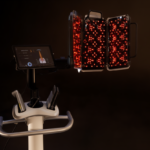
Photobiomodulation works by exposing the skin to gentle light emitted by LEDs or low-power lasers. But a common question arises when a patient is already undergoing drug therapy: Can these two approaches be used together safely?
Understanding the mechanisms at work allows us to approach this combination with greater peace of mind and realistic expectations. Because behind its ease of use, certain interactions are sometimes possible and deserve to be clarified.
Photobiomodulation and Medications: Different Mechanisms
Photobiomodulation acts locally, at the level of the cells exposed to light. The wavelengths used (usually red or near-infrared) interact with certain cellular structures, promoting more efficient energy utilization.
Medications, on the other hand, follow a completely different path. They are absorbed, distributed throughout the body, and then metabolized before being eliminated.
This difference is crucial:
-
The light targets a specific area of the skin
-
Medications have a more systemic effect, via the bloodstream
-
The two follow different biological pathways.
In most cases, this means that there is no direct interaction between photobiomodulation and the active ingredients.
What the Available Data Shows
Research data show that photobiomodulation is generally well tolerated, including when used in conjunction with other approaches.
Low-intensity LED or laser devices are designed to deliver moderate energy. This energy does not alter the chemical structure of drugs present in the body.
The available observations suggest that:
-
Light does not affect the effectiveness of medications
-
It does not increase their concentration in the body
-
it does not interfere with their mechanism of action
In other words, under normal circumstances, the two can coexist without interfering with each other.
Situations That Require More Attention
Certain medications make the skin more sensitive to light. This is known as photosensitivity. In this context, exposure to certain light sources can cause more severe skin reactions.
With photobiomodulation, the risk remains limited because the light used is controlled and targeted. However, caution is advised in certain cases.
Here are some situations where it's helpful to pay special attention:
-
Photosensitizing medications : Certain antibiotics, dermatological treatments, or supplements can increase the skin's sensitivity
-
Sensitive or irritated skin: Light may be perceived differently depending on the condition of the skin
-
Areas recently exposed to the sun: the skin may already be sensitized
In these cases, the goal is not to systematically avoid photobiomodulation, but to adjust the settings or the frequency of the sessions.
Adjust the settings for greater comfort
One of the advantages of photobiomodulation is its flexibility. The settings can be adjusted according to individual needs and how the user feels.
A few simple guidelines will help ensure this approach is used effectively:
-
Start gradually: Focus on short sessions at first
-
Monitor the skin for reactions: redness, warmth, or unusual sensations should be noted
-
Space out treatments as needed: give your skin time to adjust
-
Choose the right device: an LED mask, panel, or portable model, depending on the area to be treated
These adjustments help ensure that sessions remain comfortable, even when taking medication.
Can we observe combined effects?
Some people report an overall improvement in their well-being when they combine photobiomodulation with medication. This does not mean that light enhances the effects of the medications, but rather that it acts on complementary mechanisms.
For example:
-
a sensation of muscle or joint relaxation
-
a gradual decrease in certain localized sensitivities
-
an improvement in the skin's appearance
These effects vary from person to person. They depend on many factors, including the frequency of sessions, the area of the body exposed, the type of device used, and individual sensitivity.
An approach to be integrated into a comprehensive framework
Combining photobiomodulation and drug therapy is not a matter of one replacing the other, but rather of the two coexisting. The challenge lies in understanding the role of each approach.
Photobiomodulation is part of a holistic approach to well-being. It can help the body maintain its balance, without replacing other forms of treatment.
Keeping this perspective in mind helps avoid unrealistic expectations. The program is not a substitute for existing support, but it can serve as a complement to it, as part of a supportive approach.
Finding the Right Balance
Combining photobiomodulation with medications is based on a simple idea: their mechanisms are different and rarely overlap.
In the vast majority of cases, combined use is possible, provided you monitor your skin’s reactions closely and adjust the sessions as needed. Situations involving photosensitivity simply require extra caution.
Listening to yourself, moving forward gradually, and adjusting based on how you feel remain the best guidelines. It is within this balance that photobiomodulation finds its place, as a subtle form of support that promotes well-being.