Photobiomodulation and androgenetic alopecia in men: a comparative study of efficacy

Androgenetic alopecia in men most often manifests as gradual hair loss, which begins quietly but gradually reduces hair density. This common condition raises a simple question: how can we manage this hair loss, and what results can we realistically expect?
Among the available approaches, photobiomodulation using LEDs or low-level laser therapy (LLLT) is gaining attention. It utilizes red light, with results that are long-lasting and consistent.
Understanding androgenetic alopecia and hair loss
Androgenetic alopecia is linked to a specific reaction of hair follicles to androgen hormones. Over the years, these follicles become less active, producing finer hair, eventually leading to increased hair loss in certain areas of the scalp.
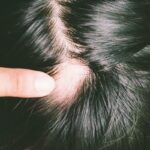
This hair loss does not occur evenly. It mainly affects the temples, the hairline, or the crown of the head. The scalp remains healthy, but hair growth gradually slows down.
In this context, the goal is not to completely stop hair loss, but to support the follicles that are still active. This is where photobiomodulation comes into play.
Photobiomodulation: Treating Hair Loss with Light
Photobiomodulation uses LEDs or low-level laser therapy (LLLT), typically in the red light spectrum. This light penetrates the scalp and acts directly on the cells involved in hair growth.
In the context of alopecia, this approach aims to support follicle function and minimize the impact of hair loss.
During the sessions, several mechanisms are explored:
- Stimulate hair follicle activity to slow hair loss associated with alopecia
- Improve microcirculation in the scalp to support hair follicles
- Extend the hair growth phase to promote visible results
This isn't an instant transformation, but rather a gradual process that works on the hair's condition.
What results can be expected in terms of hair loss and density?
The results of photobiomodulation for androgenetic alopecia vary from person to person. They depend, in particular, on how long the hair loss has been occurring and the condition of the hair follicles.
In some men, the following are observed:
- A gradual reduction in hair loss, particularly in areas where hair growth is still active
- Thicker hair, which enhances the perception of density
- More consistent visual results, with less contrast between sparse areas
These results generally become apparent over the course of the sessions. Consistency plays a key role. When hair loss has been present for a long time, the results may be less noticeable.
Photobiomodulation or hair care: how effective are they?
When it comes to alopecia, conventional hair care products (lotions, shampoos) are primarily designed to improve the appearance of the hair and promote scalp comfort. They can help manage hair loss without directly affecting the underlying activity of the hair follicle.
Photobiomodulation is distinguished by its more targeted action on the mechanisms associated with alopecia and hair loss.
To sum up:
- Hair care: improving appearance and managing hair loss
- Photobiomodulation: stimulating hair follicles to support long-term results
These two approaches can be combined to optimize overall results.
Photobiomodulation and Transplantation: What Are the Complementary Results?
In advanced cases of alopecia, hair transplantation remains a viable option. It allows hair to be transplanted into thinning areas, but does not stop hair loss in areas that have not been treated.
Photobiomodulation can then be used as a complementary treatment, with expected benefits for the scalp environment.
It can be used:
- Before a hair transplant, to prepare the scalp and minimize existing hair loss
- After a hair transplant, to support the growth of the transplanted hair and maintain the results
This combination is part of a comprehensive approach to managing alopecia.
Frequency of sessions and changes in results
The results of photobiomodulation depend on repeated sessions. A single treatment is not enough to have a lasting effect on hair loss.
The standard recommendations are:
- Short sessions, lasting just a few minutes per area
- Several times a week
- Consistency over time, to sustain the results achieved
Certain LED or laser devices, similar to a headset, help maintain consistency and make it easier to incorporate these sessions into your daily routine.
Price and accessibility: a factor to consider
The price of photobiomodulation devices varies depending on the technology used (LED or LLLT) and the quality of the equipment. This initial investment may seem significant.
On the other hand, it allows for repeated use without an additional cost per session, which can be beneficial as part of a long-term approach to treating alopecia.
The choice often depends on the desired outcome and the level of commitment to managing hair loss.
A step-by-step approach to alopecia
Photobiomodulation does not cure hair loss, but it can help manage its progression. It is primarily intended for men who want to take action at the first signs of hair loss.
The results are based on a simple principle: supporting follicles that are still active, slowing hair loss, and gradually improving the appearance of the hair.
Since every situation is different, some people prefer a combination of approaches, while others rely on regular red light sessions.
In any case, photobiomodulation is part of a gradual process, in which results are achieved over time through consistent and sustained use.

 Photobiomodulation et alopécie androgénétique chez l’homme : efficacité comparéePar Vanessa, le 26 mars 2026
- Comment stopper la chute de cheveux chez les femmes grâce à la photobiomodulation ?Par Vanessa, le 10 septembre 2024
 Comment faire pour que les cheveux poussent plus vite grâce à la photobiomodulation ?Par Vanessa, le 3 mai 2024
 Pourquoi ai-je des démangeaisons du cuir chevelu et comment la photobiomodulation peut-elle apaiser ces symptômes ?Par Vanessa, le 6 novembre 2024
- Je perds mes cheveux : comment la photobiomodulation peut-elle aider ?Par Vanessa, le 29 mai 2024
 Comment apaiser le psoriasis du cuir chevelu avec la photobiomodulation ?Par Vanessa, le 27 décembre 2024
 La photobiomodulation peut-elle limiter la chute de cheveux liée au stress ?Par Vanessa, le 21 mars 2025